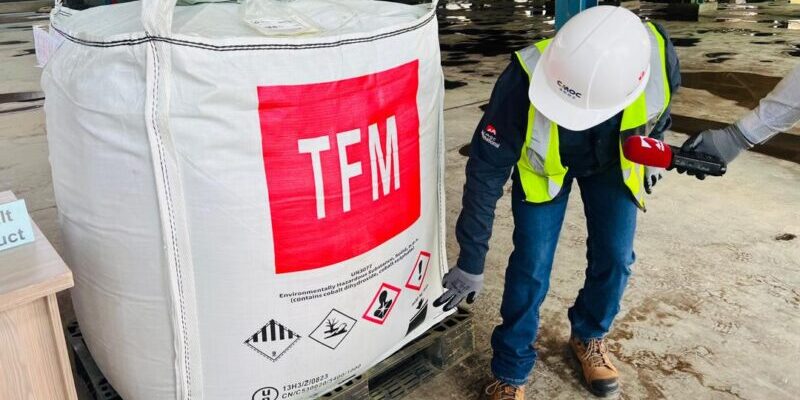
Tenke Fungurume Mining Accounts for Over 20% of DRC Mining Revenues in 2023
CMOC’s Tenke Fungurume Mining leads DRC mining revenue contributions with $1.1bn in 2023, EITI report shows
Tenke Fungurume Mining (TFM), a subsidiary of the CMOC Group, contributed 20.47% of total mining sector revenues in the Democratic Republic of the Congo during the 2023 financial year.
The figures were disclosed in the latest report by the Extractive Industries Transparency Initiative (EITI) for the Democratic Republic of the Congo, released in early 2026.
According to the report, TFM generated approximately $1.1 billion in government revenues out of the $5.6 billion collected from the mining sector in 2023, confirming its position as the single largest contributor to mining-related public finances in the country.
Mining remains backbone of public revenue
Combined revenues from the extractive sector comprising mining and petroleum totalled about $5.6 billion in 2023, representing roughly 60% of total current and exceptional revenues collected by the Public Treasury, according to the Court of Auditors of the Democratic Republic of the Congo in its report on the execution of state accounts for the 2023 financial year.
The data underscores the continued dominance of the mining industry in supporting national fiscal revenues.
Other major contributors to mining revenues
Several other large-scale mining operations also made significant contributions to government income during the year. These include:
- Kamoto Copper Company (KCC), which contributed approximately $655.8 million (11.69%)
- Kamoa Copper, contributing about $512.1 million (12%)
- Compagnie Minière de Musonoie, contributing roughly $288.6 million (5.14%)
These figures illustrate the concentration of fiscal contributions among a relatively small number of large industrial mining operations.
Economic vulnerability linked to commodity dependence
The Democratic Republic of the Congo’s economy remains heavily reliant on the extractive sector, particularly copper and cobalt mining.
While this dependence provides substantial fiscal revenue, it also exposes the country to external economic shocks.
A significant decline in international commodity prices could rapidly reduce government income, potentially affecting public spending and investment in infrastructure and social services.
As a result, economists and policymakers continue to emphasise the importance of economic diversification to strengthen fiscal stability and reduce long-term vulnerability to commodity market volatility.