BRICS Plus Nations Expand Gold Reserves as Central Banks Accelerate Shift Away from Dollar
BRICS Plus gold reserves surpass 6,000 tonnes as central banks boost purchases and dollar share declines
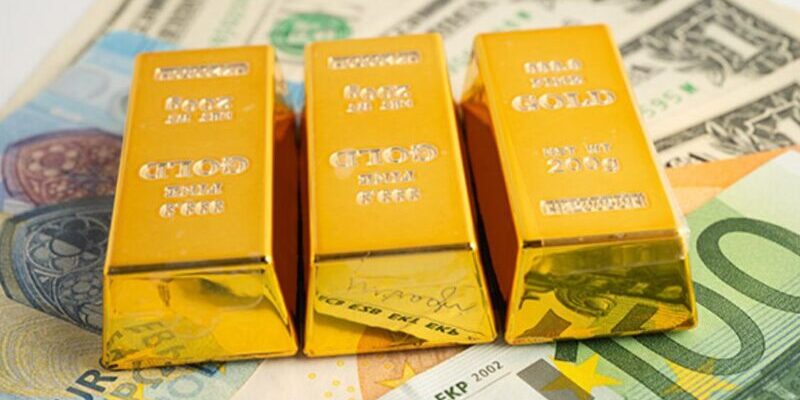
Members of the BRICS Plus trade bloc now hold more than 6,000 tonnes (t) of gold, representing about 17.4% of total global central bank reserves, up from 11.2% in 2019, according to a market note by financial services group EBC Financial Group.
Russia leads the bloc with 2,336 t of gold reserves, followed closely by China with 2,298 t, while India holds 880 t. Together, Russia and China account for roughly 74% of the bloc’s total gold holdings.
Between 2020 and 2024, BRICS Plus member central banks purchased more than half of all gold acquired by sovereign institutions globally, underscoring the growing strategic role of the metal in national reserve portfolios.
In the first nine months of 2025, BRICS Plus nations added 663 t of gold valued at approximately $91 billion to their reserves.
Brazil also resumed purchases during this period, acquiring 16 t in September 2025, marking its first addition since 2021.
Sanctions drive structural shift in reserve strategy
EBC attributes the acceleration in gold accumulation to geopolitical developments, particularly the freezing of approximately $300 billion in Russian foreign exchange reserves by Western nations in 2022.
Following that event, global central bank gold purchases increased sharply from an estimated 500 t per year prior to 2022 to more than 1,000 t annually in each of the three years since.
Unlike foreign currency reserves, gold held in domestic vaults cannot be frozen or restricted through the Society for Worldwide Interbank Financial Telecommunication (SWIFT) system, reinforcing its appeal as a strategic reserve asset.
Dollar dominance gradually erodes
The expansion of gold holdings is occurring alongside a steady decline in the US dollar’s share of global reserves.
Data from the International Monetary Fund’s Currency Composition of Official Foreign Exchange Reserves (COFER) database shows the dollar’s share falling from 71% in 1999 to about 57% by the end of 2025, its lowest level since 1994.
Foreign central bank holdings of dollar-denominated assets have remained largely unchanged since 2014, suggesting the decline is driven less by active selling and more by diversification into other assets.
EBC notes that the shift reflects faster growth in reserves held in euros, yen, gold and a broader basket of non-traditional currencies, rather than a wholesale retreat from the dollar.
A 2025 survey by the World Gold Council found that 73% of central bankers globally expect the dollar’s share of reserves to decline further over the next five years, while 43% plan to increase their gold holdings both record-high readings.
Gold’s share of official reserve assets has more than doubled from below 10% in 2015 to over 23% today, driven by both price appreciation and increased portfolio allocations to the metal.
EBC notes that geopolitical tensions, including disruptions in the Hormuz region, have further reinforced the urgency of reserve diversification.
Saudi Arabia seen as potential catalyst
Saudi Arabia currently holds about 323 t of gold, representing just 2.6% of its total reserves a relatively low allocation given the Kingdom’s reserve base of more than $500 billion.
EBC estimates that increasing gold holdings to just 5% of reserves would require purchases equivalent to the entire projected global central bank demand for 2026 from a single buyer.
While the Kingdom has not publicly announced plans to increase gold reserves, its membership in BRICS Plus, participation in the mBridge cross-border payments platform, and deepening economic ties with China suggest a strategic repositioning that could include greater gold accumulation.
Central bank demand creating structural market support
The World Gold Council projects central bank purchases of between 750 t and 850 t this year, levels that remain well above historical norms.
That volume represents roughly 20% of annual global mine supply, effectively creating a consistent source of demand that is largely independent of short-term price movements.
EBC argues that this sustained buying has established a structural price floor for gold, with market corrections becoming progressively shallower over time.
Institutional investment flows are reinforcing this trend. Gold exchange-traded fund inflows accelerated throughout 2025, while China’s insurance sector has begun allocating pilot positions to gold as part of portfolio diversification strategies.
Key triggers to watch
EBC identifies three developments that could accelerate the current trajectory of sovereign gold demand:
- Renewed disclosure of gold purchases by China, particularly if reported holdings exceed market expectations
- Formal increases in gold allocations by Saudi Arabia or the United Arab Emirates, confirming that newer BRICS Plus members are adopting similar reserve strategies
- Further declines in the dollar’s reserve share in upcoming IMF COFER data releases
Each incremental shift away from the dollar, the firm notes, strengthens the long-term case for continued central bank demand for gold.