Energy as the Catalyst for Zimbabwe’s Sustainable Infrastructure Strategy
Zimbabwe is repositioning energy as the central lever for infrastructure-led growth, placing efficiency and clean power at the core of its development strategy.
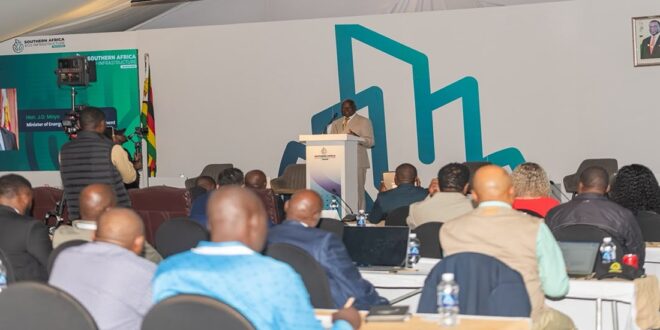
Addressing delegates at the Southern Africa Eco-Infrastructure Summit 2026 in Victoria Falls, Zimbabwe, the Minister of Energy and Power Development, July G. Moyo framed the region’s infrastructure challenge as urgent and structural. “Sustainable infrastructure is no longer an option, it is an economic necessity and a strategic imperative,” said Moyo, signalling a shift from policy ambition to execution. Zimbabwe’s National Development Strategy 2 and its National Energy Compact under Mission 300 reflect what the Minister described as a coordinated transformation of the energy sector. He added, “Energy is the foundation upon which modern economies are built. Without reliable, affordable and sustainable energy there can be no industrialisation and no inclusive economic growth.”
Government is backing this position with targeted investments in grid modernisation and expanded space for Independent Power Producers, particularly through captive power models. At the same time, mini-grid and off-grid solutions are being deployed to accelerate universal access while aligning with climate commitments. The sharper pivot, however, is toward demand-side reform. “One of the most cost-effective sources of energy is the energy we do not waste,” noted Moyo. He underscored the launch of the National Energy Efficiency Policy. Often referred to as the “first fuel,” efficiency is now being embedded across sectors to reduce system strain and defer costly generation expansion.
This shift is extending into the built environment. Government, working with the African Energy Commission, is developing modern building energy codes to improve performance standards. “Improving building performance represents one of the greatest opportunities to reduce energy demand. Positioning real estate as a critical frontier in the energy transition,” remarked Moyo. Policy certainty remains central to unlocking capital. Ongoing reforms to the Electricity Act are designed to deepen private sector participation, while new partnership models aim to accelerate electrification in underserved urban and peri-urban areas. “Policy certainty remains one of the most important considerations for investors,” emphasised Moyo.
Regionally, Zimbabwe is reinforcing its role within the Southern African Power Pool to strengthen cross-border electricity trade. “Southern Africa’s future energy security depends upon interconnected infrastructure and stronger regional power markets,” shared Moyo. He further called for expanded interconnectors and shared investment platforms. Layered onto this strategy is digital transformation. Artificial intelligence is being positioned as a system optimiser from demand forecasting to predictive maintenance and smart urban systems. “Artificial Intelligence is transforming the infrastructure sector globally. It is building more responsive and efficient cities,” said Moyo.
Zimbabwe’s message to investors underscores a priority, the structuring of bankable opportunities across energy, housing and digital infrastructure. “We encourage financiers to engage with Zimbabwe’s growing pipeline of sustainable urban development projects,” concluded Moyo. With the infrastructure demand accelerating across the region, Zimbabwe’s approach signals a broader shift of energy efficiency and clean power, which are no longer support functions but are the foundation of competitive, resilient and future-ready economies.