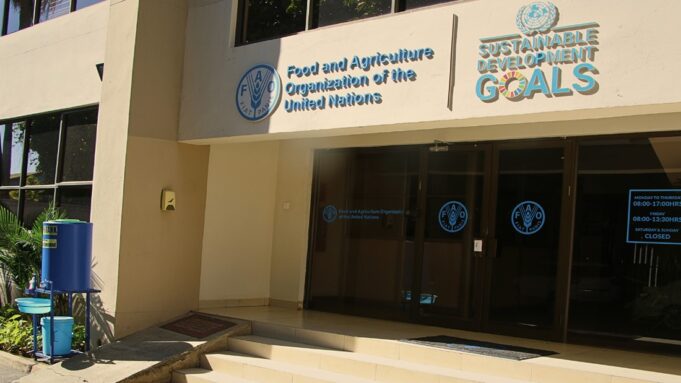
FAO’s Forest and Farm Facility Project
As Southern Africa braces for a punishing El Niño cycle ahead of the 2026/2027 agricultural season, a grassroots forestry initiative in Zambia’s southern province is emerging as a potential blueprint for climate resilience across the region.
The Choma District Tree Nurseries Association, backed by the United Nations’ Food and Agriculture Organisation (FAO), has dramatically scaled its production of tree seedlings. The project aims to combat accelerating land degradation and shield local economies from the severe droughts that have historically crippled the Southern African Development Community (SADC) bloc.
“This initiative is proof that community-led forestry enterprises can transform lives,” Ayman Omer, the FAO’s Deputy Regional Representative for Africa, said during a recent site visit. According to Omer, testimonies from local smallholders demonstrate that seedling production is actively “boosting incomes, creating jobs, and restoring land during drought periods.”
The project’s expansion underscores a broader shift toward community-driven climate adaptation as traditional agriculture faces mounting risks. Supported by the FAO’s Forest and Farm Facility Project, the Choma association has rapidly scaled its output from a baseline of 50,000 seedlings to more than 300,000.
The surge in production has effectively converted the district into a regional hub for environmental strategy, according to local officials. “The association has turned Choma into a centre for environmental education,” said Ireen Chilundika, a local forestry officer.
The FAO is doubling down on the model as regional food security hangs in the balance. Suze Filippini, the FAO’s Zambia Country Representative, reaffirmed the organization’s commitment to reinforcing sustainable forestry and land restoration frameworks as critical buffers against climate shocks.
With El Niño threatening to disrupt rainfall patterns and depress crop yields across the SADC region over the next year, economists and development officials are closely watching localized interventions. What began as a community nursery in Choma is now being positioned as a scalable, regional solution, demonstrating how hyper-local environmental action can mitigate the broader macroeconomic fallout of climate change.